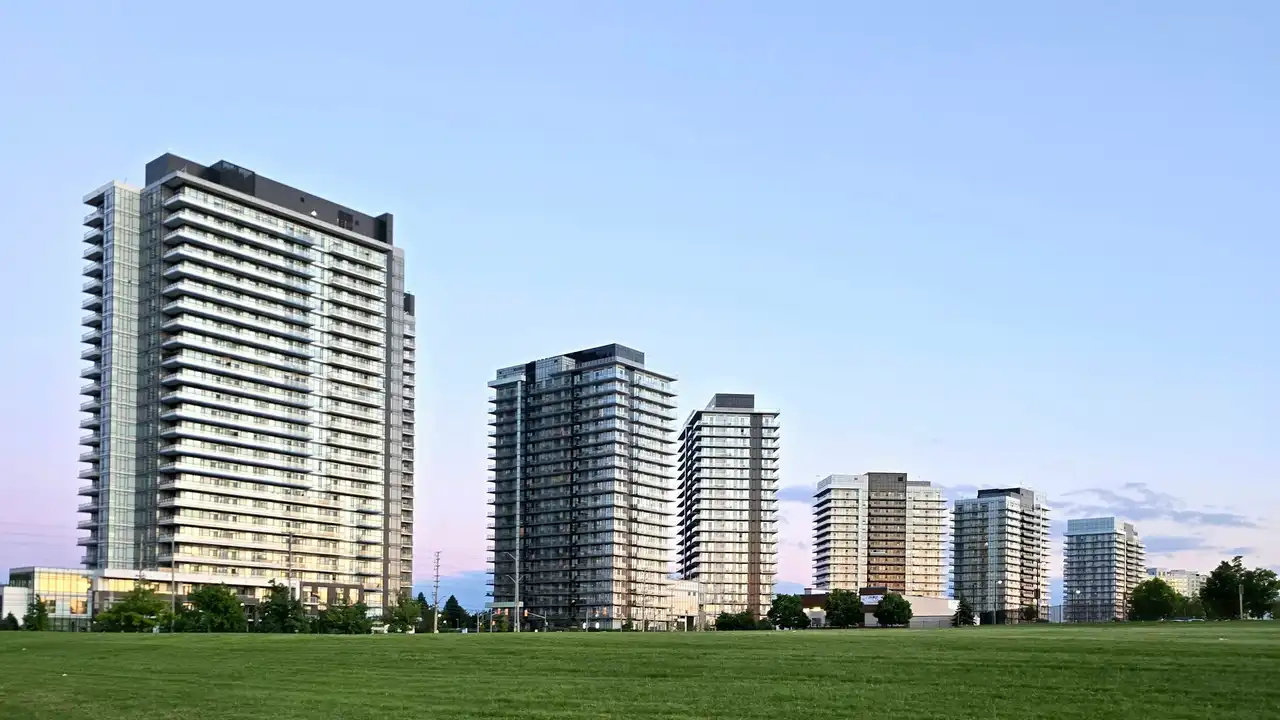
333 listings for sale in Mississauga
Current listings in Mississauga include 42 Freehold Townhouses from $748K–$1.4M and 291 Condo Townhouses from $345K–$1.7M.
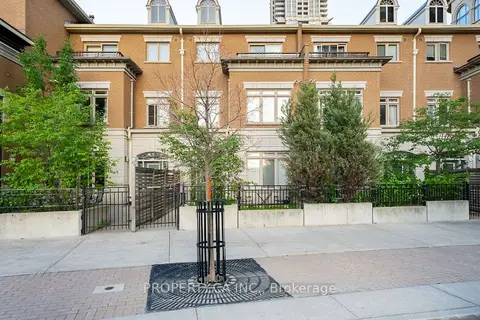
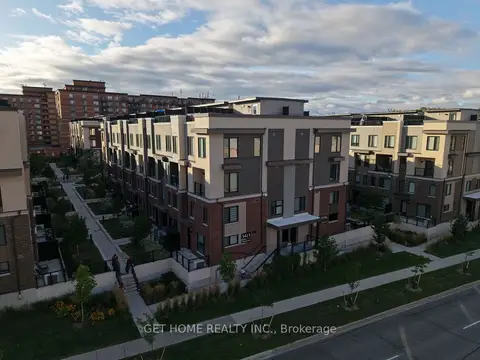
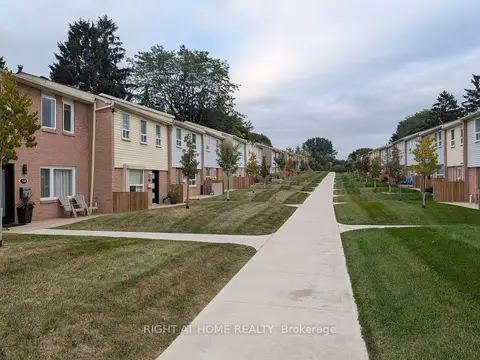
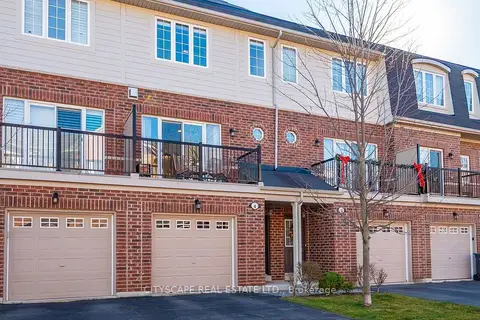
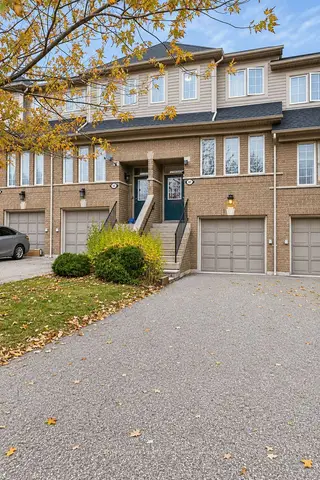
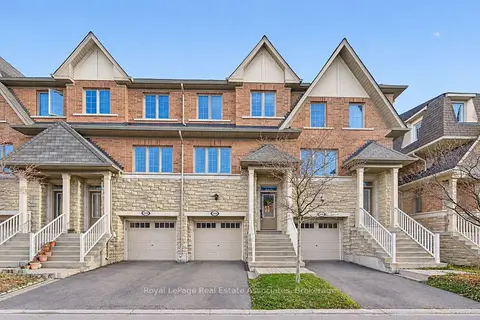
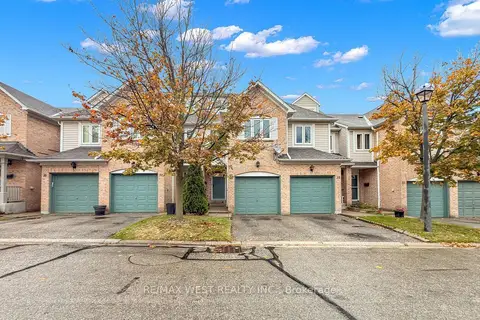
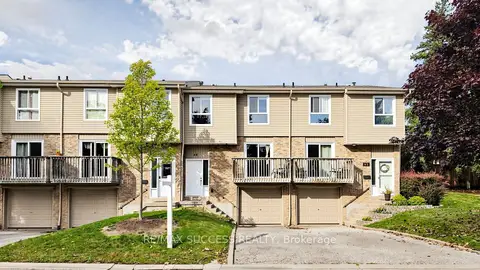
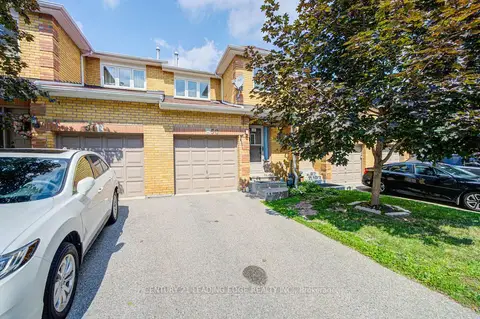
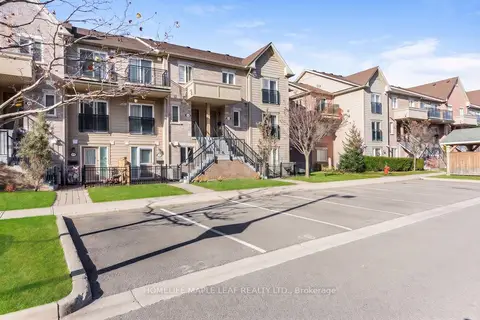
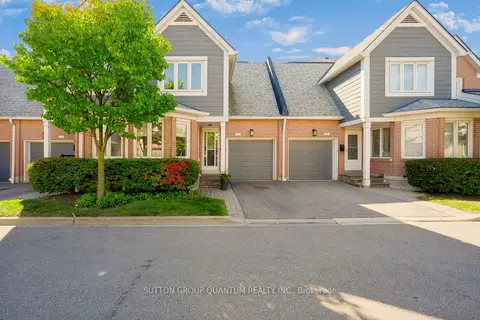
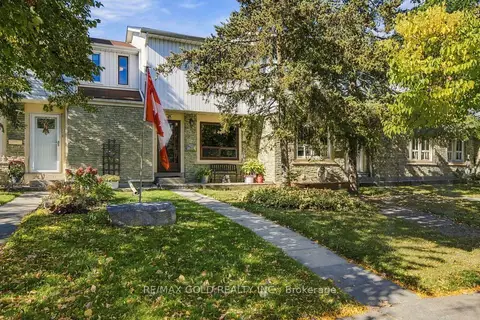
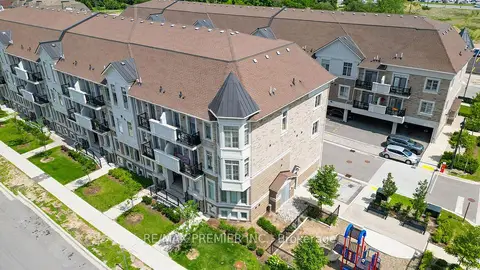
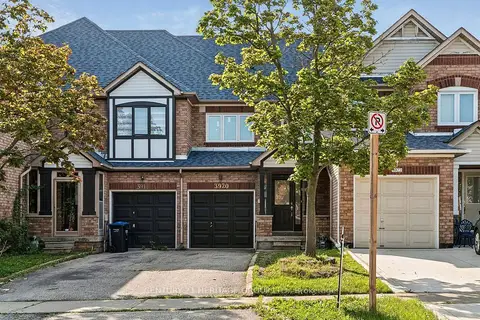
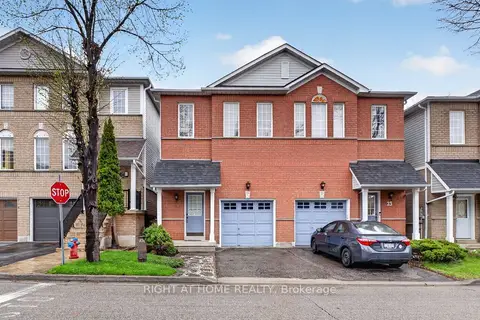
Townhouses in nearby cities
Not set on Mississauga? See townhouses for sale in the cities next door.
Choose a property type to see its market stats
Mississauga Townhouse Market · Updated November 26, 2026
Condo townhouses in Mississauga are in a balanced market, leaning toward buyers
As of November 2026, Mississauga has 290 active condo townhouses for sale.
Market condition · Condo Townhouse
Condo townhouses in Mississauga are in a balanced market, leaning toward buyers. 3.7 mo months of inventory.
How we call the market
With 3.7 months of inventory at the recent three-month sales pace, this is currently a balanced market that leans toward buyers. Only 39 homes sold for every 100 new listings over the last three months, which tips it toward buyers.
From August to October 2026, 233 condo townhouses sold, 162 sellers took their home off the market without relisting and 213 came back at a lower price — a 59% sell-through.
How it stacks up
Mississauga vs. its neighbours
In Mississauga, the median asking price for condo townhouses is $722.5K, higher than Oakville ($689.9K), Burlington ($679.9K) and Milton ($600K).
Sold figures are for sales in October 2026. Everything else is current.
Mississauga by the numbers
condo townhouses for sale in Mississauga vs nearby cities
In Mississauga, the median asking price for condo townhouses is $722.5K, higher than Oakville ($689.9K), Burlington ($679.9K) and Milton ($600K).
Condo townhouses that sold in October 2026 went for a median of $475 per square foot, lower than Oakville ($527) and Burlington ($520).
Sales in October 2026 closed at 97% of the asking price, about the same as Oakville (96%) and Burlington (96%).
Listings have been on the market for an average of 56 days, longer than Oakville (47), Burlington (50) and Milton (48).
There are 3.7 months of inventory at the recent sales pace, about the same as Oakville (3.9), and more than Burlington (2.3) and Milton (3.2).
| Metric | Mississauga | Oakville condo townhouses for sale | Burlington condo townhouses for sale | Milton condo townhouses for sale |
|---|---|---|---|---|
| Median Asking Price | $722.5K | $689.9K | $679.9K | $600K |
| Median Sold $/sqft | $475 | $527 | $520 | — |
| Sale-to-List Ratio | 97% | 96% | 96% | — |
| Avg. Days on Market | 56 | 47 | 50 | 48 |
| Months of Inventory | 3.7 | 3.9 | 2.3 | 3.2 |
Asking prices, days on market and inventory are current. Sold figures are for sales in October 2026.
Inside the market · Condo Townhouse
Where Mississauga prices actually sit
Price trend
Median asking vs. median sold, Nov '25 – Nov '26
| Month | Median asking price | Median sold price |
|---|---|---|
| Nov '25 | — | $710,000 |
| Dec '25 | — | $725,000 |
| Jan '26 | — | $710,000 |
| Feb '26 | — | $695,000 |
| Mar '26 | — | $711,000 |
| Apr '26 | — | $725,000 |
| May '26 | — | $692,000 |
| Jun '26 | — | $710,000 |
| Jul '26 | — | $670,000 |
| Aug '26 | — | $691,000 |
| Sep '26 | — | $675,250 |
| Oct '26 | — | $678,800 |
| Nov '26 | $722,450 | $710,000 |
Mississauga condo townhouses: the figures in words
As of November 2026, Mississauga has 290 active condo townhouses for sale with a median list price of $722.5K, averaging 56 days on market. With 3.7 months of inventory at the recent three-month sales pace, this is currently a balanced market that leans toward buyers. Only 39 homes sold for every 100 new listings over the last three months, which tips it toward buyers.
What actually sold
85 condo townhouses sold in Mississauga in October 2026 at a median of $678.8K. Sales closed at an average of 97% of asking price.
Closed sales. The listing figures describe homes still on the market.
| Metric | Current |
|---|---|
| Active listings | 290 |
| Median asking price | $722.5K |
| Average days on market | 56 |
| Months of inventory | 3.7 mo |
| Sales in November 2026 (month to date) | 38 |
| Median sold price | $710K |
| Sold $ per sqft | $487 |
| Sale-to-list ratio | 97% |
| Sales-to-new-listings ratio | 43% |
| Year-over-year median sold-price change | 0.0% |
- Median list price:
- The middle asking price among active listings: half are listed higher, half lower.
- Months of inventory:
- How long it would take to sell all current listings at the recent sales pace. Lower favors sellers, higher favors buyers.
- Sale-to-list ratio:
- Average sold price as a percentage of asking price. Above 100% means homes are selling over asking.
- Sales-to-new ratio:
- Homes sold this period as a share of new listings. A higher ratio signals stronger demand.
- Sold $ per sqft:
- Median sold price divided by square footage, for comparing across different unit sizes.
How we call the market
With 3.7 months of inventory at the recent three-month sales pace, this is currently a balanced market that leans toward buyers. Only 39 homes sold for every 100 new listings over the last three months, which tips it toward buyers. From August to October 2026, 233 condo townhouses sold, 162 sellers took their home off the market without relisting and 213 came back at a lower price — a 59% sell-through. Over August to October 2026, homes sold for a median 94.1% of their first asking price, and the median sold price per square foot was down 8.8% from the same months a year earlier.
What we measure, over the last three full months
- Months of inventory: homes for sale today, divided by the average number sold per month. Fewer months means less choice for buyers.
- Sell-through: of the sellers whose listing ended, the share who actually sold. A seller who takes their home off the market and doesn’t list it again within 60 days counts as not selling. A home that comes off and goes back on (often a day later, at a lower price) counts as a price cut, not a seller giving up.
- Sold vs. first asking price: what homes sold for, compared with the price they were first listed at. We follow a home back through any relists, because a relist starts a new MLS® listing and hides the earlier, higher price.
- Sales to new listings: homes sold for every 100 that came on the market. TRREB publishes this as its SNLR. Under 40% favours buyers and over 60% favours sellers.
- Price trend: the median sold price per square foot, compared with the same three months a year earlier.
How the call is made
- Seller’s market: under 3 months of inventory, at least 70% sell-through, and homes selling for 98% or more of their first asking price, or prices up from a year ago while homes sell for at least 96% of it. We also need at least 20 sales in the three months, because a handful of sales can swing the numbers.
- Buyer’s market: over 6 months of inventory, or under 50% sell-through (more sellers giving up than selling).
- Balanced market: everything in between, including low inventory where sellers are cutting prices, relisting or pulling their homes. We say it leans toward buyers when fewer than 40% of new listings sold or inventory is 5 months or more, and toward sellers when more than 60% sold.
Based on MLS® listings from TRREB. Area totals only. We don’t show a call when fewer than 10 homes sold in those three months. Relists are matched by address, so a home relisted under a differently written address counts as taken off the market. Private sales and listings not on MLS® aren’t included. This is a general guide to the area, not an appraisal or advice about a specific home.
Based on properties for sale and sold. Rentals not included.
Aggregate estimates from TRREB MLS® data (PropTx feed). Deemed reliable but not guaranteed, and not an appraisal. Full terms.
See the address, photos and exact price of every sale
See the address, photos and exact sale price for every recent transaction, free with a registered account.
Free monthly email
Get Mississauga sold prices by email each month
One email when the Mississauga market report updates. No account needed, and you can unsubscribe any time.
Mississauga Townhouse Developments
Explore townhouses for sale across Mississauga's established and emerging townhouse communities. Browse development-level listings, pricing, amenities, suite sizes and market data for individual Mississauga townhouse developments.
- 1292 Sherwood Mills Boulevard Townhouses
- 7101 Branigan Gate Townhouses
- 2145 Sherobee Road Townhouses
- 2700 Battleford Road Townhouses
- 6625 Falconer Drive Townhouses
- 5910 Greensboro Drive Townhouses
- Streetsville Walk Townhouses
- 6780 Formentera Avenue Townhouses
- 333 Meadows Boulevard Townhouses
- 2285 Mcnab Lane Townhouses
- Thomas Park Townhomes
- The Treetops Townhouses
22 neighbourhoods
Browse Mississauga Townhouses by Neighbourhood
Each part of Mississauga has its own character, prices and listings. Start with the one that fits.
- Erin Millsa large master-planned community in west Mississauga near the Credit River55 Townhouses For Sale
- Churchill Meadowsa newer master-planned family community in west Mississauga33 Townhouses For Sale
- Hurontariothe Hurontario corridor through central Mississauga, on the new Hazel McCallion LRT33 Townhouses For Sale
- Meadowvalea green, master-planned community in northwest Mississauga around Lake Wabukayne29 Townhouses For Sale
- Applewoodan established east-Mississauga community of mature streets and parks22 Townhouses For Sale
- Clarksona historic southwest-Mississauga village near the lake and Clarkson GO15 Townhouses For Sale
- Cooksvillea historic, diverse crossroads community at Hurontario and Dundas15 Townhouses For Sale
- Streetsville"the Village in the City," a historic main street along the Credit River15 Townhouses For Sale
- Lakeview14 Townhouses For Sale
- Erindalea historic community along the Credit River near UTM and Erindale GO12 Townhouses For Sale
- East Credita family-oriented central Mississauga community near Heartland Town Centre11 Townhouses For Sale
- Meadowvale Villagea historic village and newer estates in north Mississauga near the Credit River11 Townhouses For Sale
- Mineolaa tree-canopied, family-focused enclave between Port Credit and the QEW10 Townhouses For Sale
- Port Credit10 Townhouses For Sale
- Lisgara newer master-planned family community in far northwest Mississauga9 Townhouses For Sale
- Mississauga Valleysan established, green apartment-and-condo community east of the City Centre9 Townhouses For Sale
- Rathwoodan established east-Mississauga community of mature streets and parks9 Townhouses For Sale
- Sheridanan established southwest-Mississauga community near the Credit River and QEW9 Townhouses For Sale
- City Centredowntown Mississauga around Square One, Celebration Square and the City Centre transit hub5 Townhouses For Sale
- Lorne Park5 Townhouses For Sale
- Creditviewan established central-Mississauga community near the Credit River2 Townhouses For Sale
- Fairviewa central Mississauga community beside the City Centre and Cooksville GO0 Townhouses For Sale
Best for...
Best for Resale Liquidity: Erin Mills
Erin Mills has the deepest current market surveyed -- 50 active listings and 36 closed sales in the trailing 3 months -- the most listing and sales activity of any neighbourhood surveyed.
Best for: Investors comparing which neighbourhoods have the most listing and sales activity.
Best for a Fast-Moving Market: Erin Mills
Erin Mills has the tightest inventory surveyed -- 3.8 months of supply at the current sales pace, with a $785,000 median list price.
Best for: Buyers comparing which neighbourhoods have the least inventory for their sales pace.
Best for Buyer Negotiating Leverage: Erin Mills
Erin Mills carries the loosest inventory surveyed -- 3.8 months of supply -- more listings than the current sales pace has been absorbing.
Best for: Buyers comparing which neighbourhoods have the most listings for their sales pace.
Best for a Premium, Patient Hold: Erin Mills
Erin Mills carries the highest median list price surveyed, $785,000, with a longer average time on market (53 days) -- slower than the other neighbourhoods surveyed.
Best for: Long-term holders comparing the higher-priced neighbourhoods.
Best for Cash Flow: Erin Mills
Erin Mills has the highest gross rent yield surveyed -- 4.9% (median asking rent against median list price, before carrying costs such as condo fees, property tax and vacancy; based on 27 active rentals and 50 active listings).
Best for: Investors comparing gross rental income across neighbourhoods, before carrying costs.
The buyer’s guide
Buying a Townhouse in Mississauga
01 / 09
Freehold or condo townhouse: what is the difference?
With a freehold townhouse, you own the house and the land under it, as with a detached home, but you share one or two walls. There is no condo corporation, no monthly condo fee and no board approving changes. The roof, windows, siding, driveway, furnace and yard are all yours to maintain. With a condo townhouse, you own the unit, and a condominium corporation owns and maintains the shared parts, usually roofs, outside walls, private roads, visitor parking and landscaping. A monthly fee and a reserve fund pay for it. In older Mississauga complexes, read the declaration, the complex’s founding legal document, closely: windows, doors and decks are sometimes the owner’s job and sometimes the corporation’s. Freeholds usually cost more to buy but carry no fee, so compare total monthly cost. Our guide to freehold vs. condo townhouses in Ontario compares them.
02 / 09
What is a POTL, and how do I spot one?
Some Mississauga freeholds are POTLs, or parcels of tied land. You own your house and lot, but the lot is tied to a common elements condominium that owns shared features such as a private lane, visitor parking or an entrance. POTL owners pay a monthly common elements fee, usually modest because the corporation does not maintain your house. That corporation also has a status certificate, a budget, a reserve fund and rules. The clue in a listing is the word “POTL” or a monthly fee on a home called freehold. If you see either, have your lawyer review the status certificate as carefully as for any condo.
03 / 09
Where are the freehold and condo townhouses in Mississauga?
Freehold townhouses were mostly built in the 1990s and 2000s subdivisions of the west and north. Look in Churchill Meadows, Lisgar, East Credit, Meadowvale and around Streetsville, where rows of two- and three-storey homes sit on city streets near schools, parks and Highways 401, 403 and 407. Some newer freeholds and POTLs sit on infill sites near the Hurontario corridor and in south Mississauga.
Condo townhouses are spread across most of the city. There are large groups in Erin Mills and Meadowvale (including the Bromsgrove Road townhouses in Clarkson), and in Mississauga Valleys, Cooksville, Rathwood, Malton and Sheridan, many on private internal roads. Newer stacked and back-to-back townhomes cluster near transit, around Square One, along Hurontario, in Churchill Meadows and near Port Credit and Lakeview. The tiles on this page show where today’s listings are, and the Mississauga townhouse directory lists each condo complex.
04 / 09
Why does the age of a condo townhouse complex matter?
Many of Mississauga’s condo townhouses were built in the 1970s and 1980s. Many of those complexes are now replacing roofs, windows, siding, fences and private roads for the first or second time. That is normal, but costly, and who pays depends on planning. A complex with a healthy reserve fund and a recent reserve fund study can pay from savings. An underfunded one may raise fees sharply or charge every owner a special assessment. So two similar townhomes at similar prices can carry very different future costs. Ask what has been replaced and when, and what the study plans for the next few years. Older complexes often reward that homework with bigger floor plans, private yards and mature trees.
05 / 09
What do condo townhouse fees pay for?
The fee pays to maintain and insure the shared parts, for management, snow clearing and landscaping, and for the reserve fund. Some complexes include water, cable or internet; others leave every utility to you, so compare what is included before comparing amounts. A higher fee in an older complex can be a sign of good planning if the reserve fund study backs it up. Be more careful with a fee that looks low for the complex’s age, since repairs may be underfunded now and billed later. Look at several years of fee history, and read how to evaluate condo maintenance fees.
06 / 09
What does a freehold townhouse really cost to own?
Skipping the condo fee does not mean skipping the costs it would cover. They come as occasional large bills instead. Set money aside every year for the roof, windows, furnace and air conditioning, water heater, driveway and fence, and insure the whole structure, not just the inside. A home from the late 1990s is likely due for a roof, furnace or windows, while a newer one may still carry some builder warranty. Shared walls bring their own duties: work on a party wall or a shared roofline affects your neighbour and can need their cooperation.
07 / 09
What should I check before making an offer?
For a condo townhouse, make the offer conditional on your lawyer reviewing the status certificate. The corporation must provide it within 10 days of a request. It shows the budget, reserve fund and study, fee increases, special assessments, lawsuits, insurance and the rules. Also ask which outside items the declaration makes yours, whether parking is owned or exclusive-use, and what the rules say about fences, decks and finishing a basement. Our explainer on the condo status certificate goes through it line by line.
For a freehold townhouse, the home inspection is your main protection. Have the inspector report on the roof’s age, the attic and the fire separation along shared walls, the windows, the furnace, air conditioning and water heater, and the grading and drainage, including any sign of past basement water. Your lawyer’s title search should confirm the lot lines and any easements; mutual driveways and shared walkways are common on Mississauga townhome lots. Check for unpermitted work such as a basement apartment or an enclosed garage. For a POTL, add the common elements status certificate to your conditions.
08 / 09
What will I pay to buy and own?
On closing, only the Ontario land transfer tax applies. Mississauga has no city tax, unlike Toronto, and eligible first-time buyers can claim a refund. Our land transfer tax calculator gives the exact figure, and our guide to closing costs in Ontario covers legal fees, title insurance and adjustments. After closing, add up the mortgage, any condo or POTL fee, property tax, insurance, utilities and a yearly repair allowance. Ask for the seller’s latest tax bill rather than guessing from the price. First-time buyers should also read about first-time home buyer incentives in Ontario.
09 / 09
What about new townhomes from a builder?
With little open land left, most new Mississauga townhomes go up on infill sites near transit. New condo townhomes are mostly stacked or back-to-back; new freeholds are often POTLs on a private lane. A new condo townhome comes with a 10-day cooling-off period after you sign and receive the disclosure statement. A new freehold does not, so have a lawyer review the agreement before you sign. Read the closing adjustments for both, since development charge increases, utility connections and warranty enrolment can be added to the price. The Tarion warranty runs one year on workmanship and materials, two years on water leaks and major systems, and seven years on major structural defects. Prices for both kinds are tracked in the Mississauga townhouse market report.
FAQ
Mississauga Townhouse FAQ
A townhome where you own the house and the lot, sharing one or two walls with neighbours. There is no condo corporation and no monthly condo fee, and you handle all repairs.
With a condo townhouse you own your unit and pay a monthly fee to a corporation that maintains shared parts such as roofs, exteriors and private roads. With a freehold you own the house and lot and pay for all upkeep yourself.
The live count and prices at the top of this page cover both kinds and update with every MLS® sync. Freeholds generally sell for more than condo townhouses in the same area because they include the land.
A standard freehold on a city street has none. A POTL is tied to a common elements condominium that maintains shared features such as a private lane, and its owners pay a monthly fee, usually much smaller than a condo fee.
It depends on the homes. A condo townhouse’s lower price comes with a fee; a freehold’s higher price comes with repair bills you fund yourself. Add up mortgage, tax, any fee and a yearly repair allowance for each.
Complexes from the 1970s and 1980s are replacing roofs, windows, siding and roads, and a well-run corporation raises fees to fund that work. A higher fee backed by a sound reserve fund study can be safer than a low fee in an underfunded complex.
A condo townhouse where units sit one above the other, each with its own entrance. You own the unit, and the corporation owns and maintains the building and grounds.
The condo corporation’s disclosure package: budget, reserve fund, fee changes, special assessments, lawsuits, insurance and rules. It must be delivered within 10 days of a request. Make any condo or POTL offer conditional on your lawyer’s review of it.
Only on a new condo townhouse, which has 10 days after signing. A new freehold bought from a builder has none, so have a lawyer review the agreement first.
No. Only the Ontario land transfer tax applies; Toronto is the only Ontario city with its own. Eligible first-time buyers can claim a refund of some or all of it.
In a freehold, possibly, subject to Mississauga zoning, permits and fire code rules for a second unit. A POTL corporation may add its own limits, and a condo townhouse needs the board’s approval for most changes.
Thinking of selling in Mississauga?
Get a home evaluation built on recent nearby sales and active competition, not a city-wide average.